
 WhatsApp +86 13550328585
 Sal.holidays25@gmail.com
WhatsApp +86 13550328585Sal.holidays25@gmail.com
In ancient Chengdu, two rivers encircled the city, while the Jinshui River and Imperial Canal meandered through its heart. A labyrinth of canals, lakes, and ponds earned Chengdu comparisons to the water towns of southern China, dubbing it the "Oriental Venice." Bridges and waterways became defining features of its landscape.
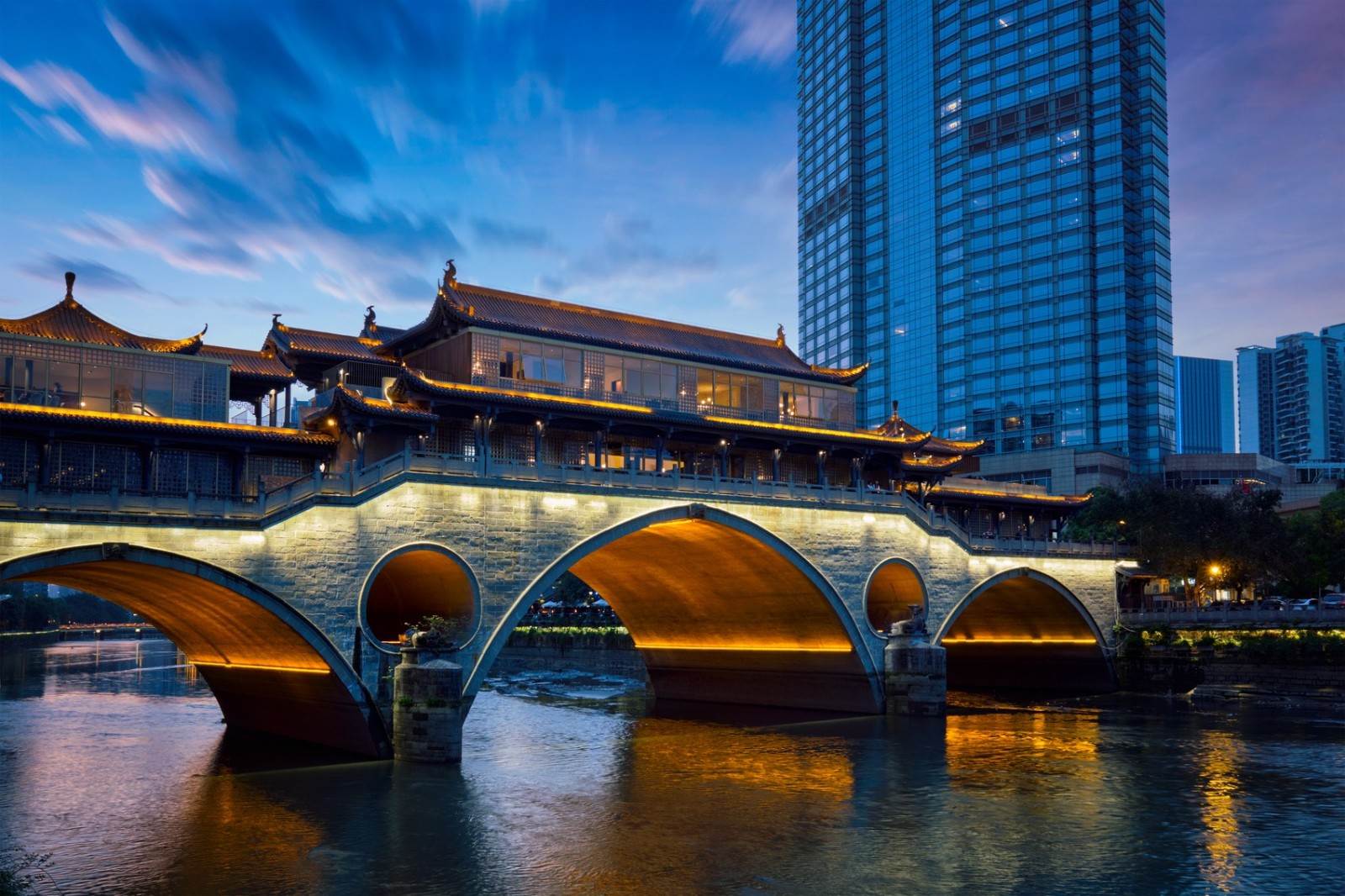
Despite numbering 24, these bridges were modestly named "Twelve Bridges," inspired by Yangzhou’s famed "Twenty-Four Bridges." Today, only a few remnants remain in People’s Park, the rest lost to time or preserved only in name.
Part of Li Bing’s Dujiangyan system, this bridge was one of seven aligned with the Big Dipper. Famous for Zhuge Liang’s farewell to Fei Yi and linked to poet Xue Tao, it was immortalized in Du Fu’s verse: "a thatched cottage west of Wanliqiao."
Built in 1593 at the confluence of the Fuhe and Nanhe Rivers, its nine arches made it a landmark. Once a bustling water terminal for travelers to Chongqing, it remains a key piece of Chengdu’s bridge heritage.
Marco Polo once mentioned this bridge. Rebuilt in 1746 as a storm-proof wooden structure, it was washed away in 1947. A modern reconstruction now stands in its place.
One of eight bridges over the Jinshui River, its green stone construction earned its colloquial name.
Named after Liu Bei ritually washing his face here before mourning Guan Yu at Yiguan Temple, only a relocated bridge and a bronze statue remain today.
Built in the 19th century, its millstone-patterned surface or nearby bean mills gave it its name. Destroyed in the 1950s, only the memory lingers.
Spanning the Fuhe River, its name derived from a gilded plaque wishing "Ten Thousand Blessings Come."
Originally Shengxian Bridge, it was renamed for Sima Xiangru’s legendary vow. A newer bridge now carries its legacy.
Known by many names, this northern gateway remains a vital link.
Songxianqiao (Farewell-to-the-Immortal Bridge): Named for alleged celestial sightings.
Wangxianqiao (Bridge of Gazing at Immortals): Spring crowds gathered here hoping for divine blessings.
Baihuatan Bridge: Built in 1959, it anchors the scenic Baihuatan Park.
Others, like Guiwangqiao (Osmanthus King Bridge) and Caihongqiao (Rainbow Bridge), survive as names or transformed structures. Together, they weave Chengdu’s 3,000-year tapestry, bridging past and future.